2026 · 08 · 28
Slow down, life ahead
Hello readers,
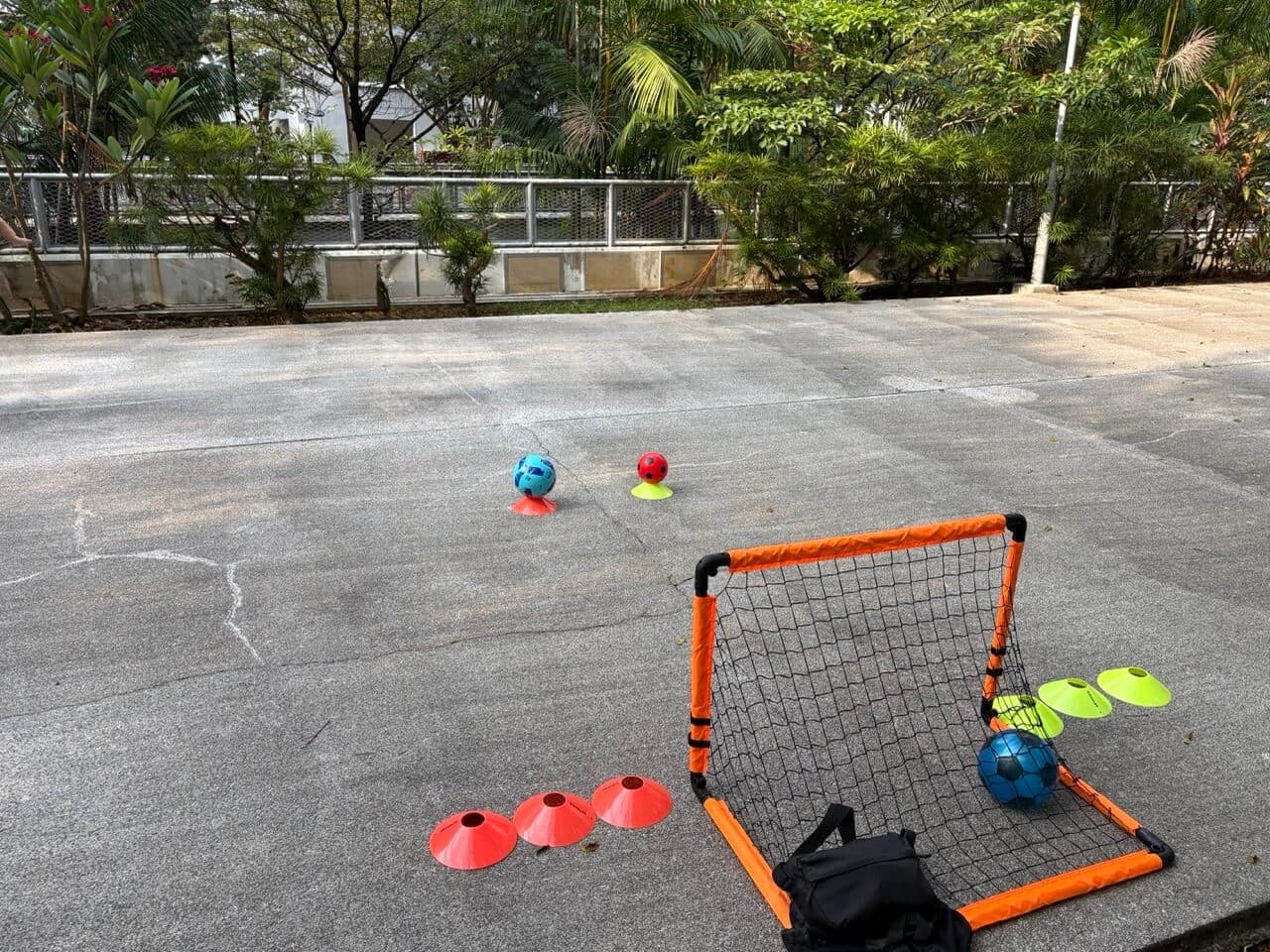
This past weekend, I held a mini-football session for my son and two of his classmates. It was chaotic, they barely listened, and my son fell down thrice. It might have been easier to sign him up for some classes. But what's the fun?
Slow down, life ahead
I once heard a story about a father rushing his son to put on his shoes. His son complained, "It's Saturday!" Then, the father caught himself. It was Saturday. They didn't have to reach anywhere by a particular time. Why was he rushing? I'm reminded of this story every time my son is putting on his shoes.
I used to be always in a rush. In my 20s, I was obsessed with productivity. I felt I had to cram as much as I could into as little time as possible. I walked super fast, thinking about nothing but my destination. My mind was always thinking about what's next because I wanted to be prepared. I thought being busy and rushing around is what an ambitious person should do. I was burnt out about once a year, which felt like a badge to show off.
(I suspect growing up in a highly efficient city like Singapore has played a part. If you are ever in Singapore, try this: Go to Raffles Place MRT station, a stop in the Central Business District, between 8am and 9am on a weekday and walk to Lau Pa Sat leisurely. Watch how quickly people overtake you. Everyone is rushing.)
A turning point for me was when I started meditating with the Calm app. In one of the free introductory sessions, the instructor says:
... We rush around in the daily grind of life and at the end of the day, falling in bed exhausted, waiting for weekends to come around. When they do, we spend our time racing the clock stressed about what we didn't achieve or what's next on our plate ...
That's me! Then it dawned on me: I was missing out on life's everyday moments. What a horrible way to live!
Slowing down is more a mindset than a matter of time. Take an hour-long drive. The driver could be frustrated at the traffic, annoyed at the cars that cut into his lane, and hopelessly wishing he could drive faster. Or he could enjoy the music on the radio, chat with his passengers, and appreciate the beautiful blue sky. The drive is still an hour. But the mindsets and experiences are different.
This is still an ongoing practice for me. Just recently, I noticed that, since having kids, my wife and I had been rushing through our dinner. Whoever finished first would wash whatever dishes could be washed, so we could wrap up dinner and sit down to relax. But one day, I noticed the irony. We were rushing to relax. Then, I decided: Let's all sit down around the table until everyone is done. Let's talk about one another's day when there are no phones, books, or toys distracting us. Let's just sit with one another, even for five to 10 minutes. Of course, it's rarely this orderly with two kids under three. But I always find it a blessing.
Here are some other things I'm doing to slow down and pay attention:
Putting my phone down. This is the most important one for me. I’m addicted to my phone and can find countless reasons to check it. Oh, I need to get Claude Code to do something. Let me read this email. Ah, I need to reply to this WhatsApp message. To fight my bad habit, I put my phone outside of my office when I work and on the charging dock when my kids are home (though I sometimes want to take photos of them). My phone is permanently on Do Not Disturb. Without my phone, my attention doesn't get hijacked. And time seems to slow down.
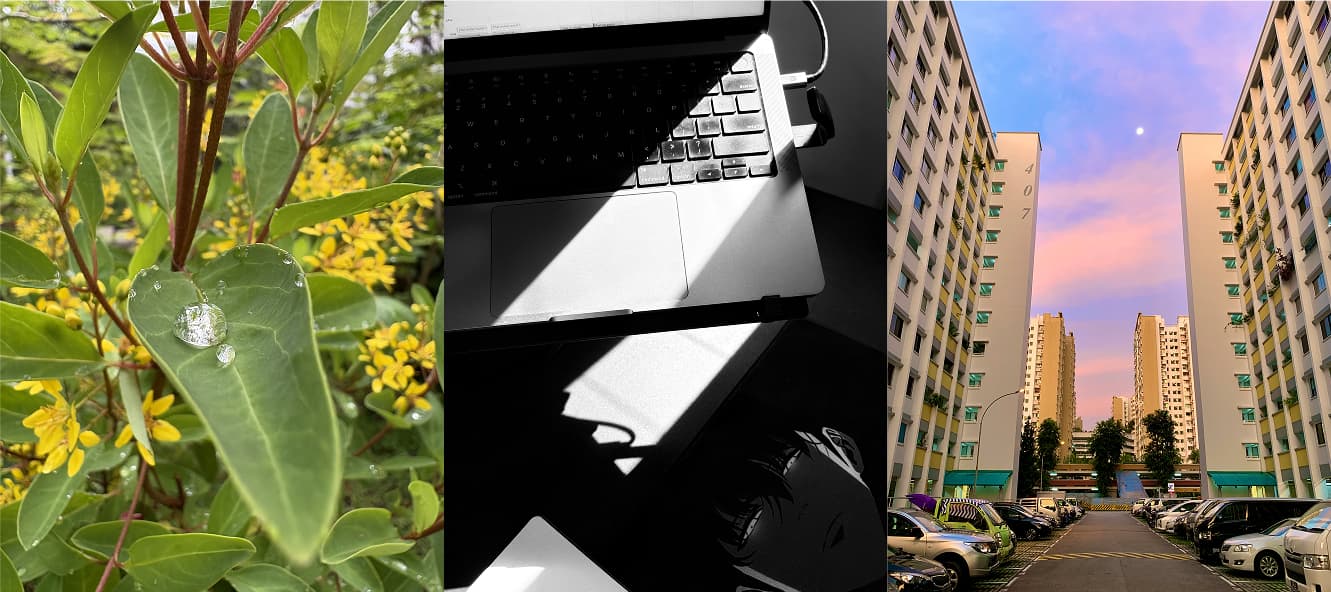
Taking photos. I'm not a professional photographer but I love capturing scenes. I bought myself a $3,000 DSLR with almost all my savings when I was 18. But it's too huge to bring around. Nowadays, even an iPhone XR produces amazing-quality photos. Whenever I'm out for a walk, I take photos of things I see, such as flowers, airplanes, and buildings. Taking photos helps me slow down and notice little details. The dew on the leaf, the direction of the sunlight, the symmetry of the buildings.
Taking notes of books. I used to pride myself on how quickly I read—until I realized how little I retained. Now I type out lines, rephrase ideas in my own words, add my reflections, and organize them into topics in Fernsage. I have even typed out an entire short book. Even though I could just copy and paste, typing slows me down and helps me internalize the ideas better.
Writing long-form essays. I choose to spend several days on each essay, instead of firing out 10 tweets a day. Having this heavier work helps me slow down and think more—because it is hard to write, edit, rewrite, and then publish a 1,000 to 2,000-word essay. Writing this newsletter every week has also encouraged me to pay closer attention to my life for interesting things to share with you. When I went to a bath house recently, I noticed small details: the orange iMacs on the reception table, the cold peach tea they served, and the rotation countdown timer for every customer.
Exercising. With Claude as planning assistant, I built myself a fitness program that includes a recovery swim and run every week and a deloading week every four weeks. To recover properly, I have to slow down to keep my heart rate under 149. It feels agonizing sometimes, especially when other runners zoom past me. But after being an athlete for 17 years, I know slowing down is part of getting faster.
Being with my children. Kids are great at being in the moment, and they are delighted by all the little things. A Zebra plate? Giggles. A piece of cake dropped on the floor? Giggles. A leaf blown onto your face? Giggles. Their laughter is so contagious that I often can’t help but laugh along at the silliest of silliest things.
Cooking. I frankly find cooking more time-consuming than I’d like and often rush through it. I have even thought about buying ready-made meals. But when I don’t rush, cooking gives me some peace. My wife and I have been trying one or two new recipes each week. Nowadays, I write down the recipes in my Fernsage after cooking the dish, which extends the experience. I also consult Gemini while cooking and have picked up new techniques, such as using grated apple to tenderize pork ribs and adding sesame oil only near the end so it doesn’t break down from the heat.
Looking outside the windows. Ever since my son became a toddler, we have been looking out of our windows regularly. There are no four seasons in Singapore, but these past few weeks, I noticed the trees at the park opposite our house are turning orange, brown, and red. Sometimes, there’s an ambulance with an urgent-sounding siren. Is someone sick? Other times, we see if the passing bus is a double- or single-decker. Oh, and where's the moon tonight?
Fixing the house. It's more efficient to get someone to fix things in the house. But my father taught me to fix things myself by fixing things in his house himself. I recently fixed a loose kitchen tap handle, two blown-out T5 LED light bulbs, and a non-IKEA shelf. When I don't know what to do, I have to slow down, study the object, and figure it out. For instance, I discovered (with Gemini's help) that my kitchen tap handle has a tiny access hole at the bottom for tightening or loosening it with an Allen key.
Taking public transport and walking. My wife and I don't own a car because we don't think the cost is justified. The price of a certificate to own a car for 10 years in Singapore is about $100,000 USD. This doesn't even include the car! While we could take Grab, we end up taking buses and trains most of the time—partially because we are frugal, partially because my son loves buses and trains, and partially because it helps me slow down.
Doing less. We all have 24 hours a day. If I squeeze in multiple activities with little buffer in between, of course I'd be rushing around. On the weekends, we now only plan one or two activities and have lots of slow leisure time. Also, I quit social media, cut back on attending events, and avoid cold coffee chats. I don't need to do many things but a few meaningful ones.
To remind myself, I even named my business Slow Delivery. As Joan Didion said, when asked why she used her good china every day: "every day is all there is." I want to live the length of a life, not rush to the end.
In the film Click, Adam Sandler received a magical remote control that let him pause, rewind, and fast forward life. Happily, he used it to skip boring and stressful moments, like traffic and arguments. Gradually, the remote learned to skip ahead whenever there's a problem he would usually fast forward through. So, when he wished to become CEO, the remote skipped 10 years of his life, making him miss important milestones like his father's death and his kids' childhood.
When I watch my son struggle to complete a puzzle or finish a sentence, my first instinct is to jump in and do it for him—so we can move on with life. But I wait. If we skip all these slow, messy moments, what is life?
From my commonplace book
Nice sentences (updated)
I’ve been reading very little this week and reconciling with nature instead—swimming, cycling, and applying large quantities of sunscreen
"Reconciling with nature" is such a beautiful phrase!
Inside the Box (updated)
I picked back up the book this past week as I have been reflecting on my new business and lifestyle. Even though I can do anything, having the freedom to do anything is probably bad. I have some thoughts about this, which I'll share in a future email. Also, I love the examples, so I copied them down.
Coding: Limiting parallel work (updated)
I used to get Claude Code to work on several big tasks in parallel, thinking this would be faster. Often, it will hit the session limit before completing them. By the time I resume the conversations after the session limit restarts, the prompt cache would have expired. So, resuming the tasks often eat up 10-20% of the session limit immediately. Working in series and completing each task within each session uses much fewer tokens and likely gives better results because I'm not switching context as much.
Around the web
How Our Leisure Time Got Monetized by Ted Gioia
Life is different now. People use up their leisure time scrolling through web ‘content’ saturated with advertisements—teens especially, who devote 4-5 hours per day on these platforms. Or they binge on Netflix. Or pay to play video games.
It's pretty sad if childhood is only filled with pixels on the screen and not sunshine, mud, and grass outdoors. I love technology but I love being outdoors more.
Paul Jarvis: gaining freedom by building an indie business with Justin Jackson
The longer I'm offline, the more trivial everything on the Internet seems.
I was looking for people who mix different work for a living and realized I hadn't seen Paul Jarvis around the internet for a while. It turns out he quit the internet in 2020 and removed all his online presence. I was reminded of another friend who used to be very famous online for his business and suddenly disappeared from the internet when he built another business that doesn't require a public face. I sometimes think about disappearing like that, too. But I also value having an outlet to share my experiences, help others, and put my perspectives out there. Would you?
Leisure as a Dream Job by Madison Huizinga and A Billion Dollars by Kevin Kelly
I recommend reading these two together (and also my newsletter on the odd shapes of work!) Did you know Dua Lipa has a free newsletter and a book club? Madison Huizinga hypothesized that, instead of trying to be one of the greatest pop artists, Dua Lipa is "sacrificing" that to also pursue her interest in travel, food, and books. Similarly, Kevin Kelly advises that we don't need a billion dollars before we pursue our dreams.
After a few rough weeks, life seemed to have settled down a little. Last week, I wrote about running on a slower clock while my child was sick. Looking back, perhaps that was just another reminder to slow down.
Warmly
Alfred
Want to come back to this later?Keep it in your digital commonplace book.
Save to FernsageRecent newsletters
- 2026·10·23
- 2026·10·16