2026 · 08 · 14
The one habit that keeps me grounded
Hello readers,
It has been blazing hot in Singapore for the past week... except for last Friday when it poured during my recovery run. Of course it did.
Speaking of running, I found a new favorite running route! There’s a park connector near my place that I avoided for quite literally my entire life because I thought my running routes were good enough. Flatter path, fewer people, and only two traffic lights away. There's also a down-to-earth cafe at the end, and my wife and I will pop in there for coffee when we run together. I'm glad I went exploring!
(I have more to say about exploring a neighborhood on foot—or bicycle. More next time!)
The one habit that keeps me grounded
Often, everything feels out of control. My toddler melts down because I walked to the bathroom. Few people open the newsletter I wrote and rewrote all week. Nobody seems interested in the apps I spent months building.
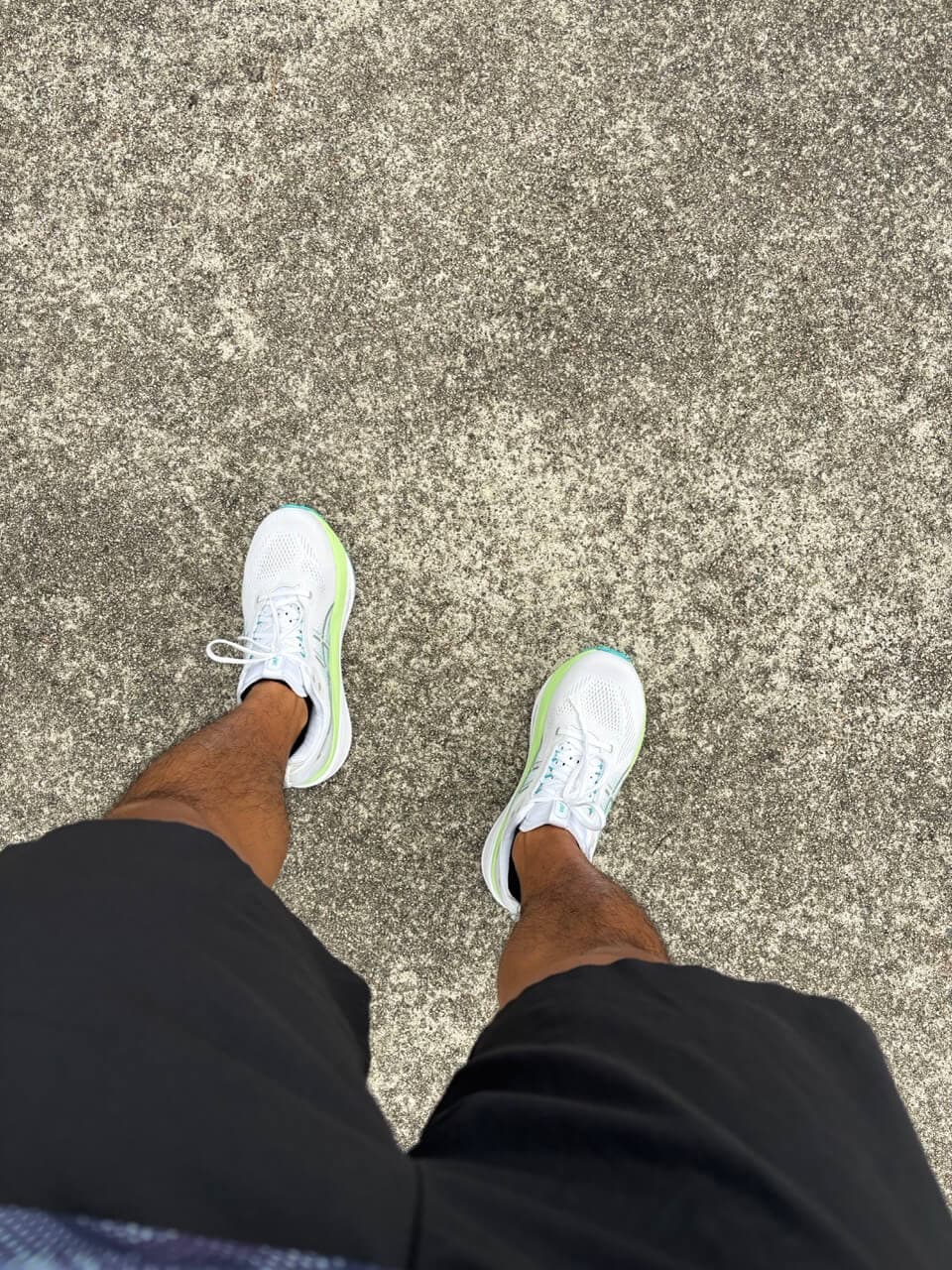
In times like this, I just want to lie flat on my living room floor and watch the ceiling fan spin. But I don't. I lace up and head out for a run. When everything feels chaotic and overwhelming, I fall back on this habit:
Exercise.
I have been exercising in the morning for more than two decades. It first started against my will. I failed my physical test in high school and had to run around the school track even before the sun was up. But gradually, working out in the morning became my routine. In the military, I exercised before the first parade. At university, I exercised before the first lecture. For the last 10 years, I have been exercising before my workday starts.
Then it became my support system. I need to exercise. It keeps me grounded and sane. After a workout, everything just feels not that bad. Not perfect. But not as bleak as I had thought. Perhaps it’s the dopamine. Perhaps it’s the break giving me a new perspective. Perhaps it’s the fatigue calming my restless mind.
Besides all the wonderful health benefits, there’s a special quality to exercising. Take running. At its core, it’s putting one foot in front of the other. It doesn’t matter how slow I am. If I keep putting one foot in front of the other, I'll finish my run. If I keep running one run after another, I'll improve. I can’t prevent my toddler from throwing a tantrum or force people to buy my products. But to put one foot in front of the other? I sure can.
At some point, I realized this isn’t just about exercising. It’s about control. About agency.
When I stepped back from my startup to take a five-month break, I felt lost. My professional identity went from a cofounder to nothing. I was so anxious that I couldn’t even nap in the day after not sleeping at night. I kept thinking, "what should I do? What should I be doing?" So, I fell back to my habit. I turned to weightlifting. Week by week, little by little, I lifted heavier weights. I put in the reps, and I made progress. I felt in control. That helped me gradually find my way forward.
It wasn't all smooth sailing for Winston Churchill. In 1929, his political career was at a low point. He lost his government position and his party lost the election. Everything felt out of control. He turned to laying bricks at his country home, Chartwell. In his letters to his wife, he wrote about how mixing mortar and setting straight courses grounded him when political news was grim. Physical, tangible work gave Churchill something he could control when his political world was uncertain. He couldn't change his situation immediately, but to lay one brick after another? He sure could.
We often get frustrated and overwhelmed when others don't act the way we hoped. I have already done this. Why won't you do that? Instead of focusing on ourselves, we wish others would behave the way we hoped. But as Epictetus wrote, Some things are in our control and others not. Things in our control are opinion, pursuit, desire, aversion, and, in a word, whatever are our own actions. Things not in our control are body, property, reputation, command, and, in one word, whatever are not our actions."
I can’t control whether my toddler is upset.
But I can love him, set boundaries, and manage my emotions.
I can't control whether my baby falls sick.
But I can keep the house clean, wash our hands regularly, and stay healthy myself.
I can’t control whether people buy my apps.
But I can talk to potential users, refine the product, and pivot if necessary.
I can’t control whether subscribers read and share my emails.
But I can study other writers. I can learn from my mistakes. I can keep writing and hitting that "Send" button.
And when I don't know what to do, I know where to start.
I lace up.
I put one foot in front of the other.
From my commonplace book
Writing lessons and mistakes (new)
I'm trying a new practice of noting down my lessons and mistakes from each newsletter. Can this improve my writing? You can be the judge!
Non-conventional working hours (new)
Sometimes we get too fixated on needing eight hours of uninterrupted time to do good work. Don't get me wrong; I think uninterrupted time is crucial. But not everyone can have a good eight-hour stretch, especially parents. So, I curated a list of people who did great work during non-conventional working hours.
Eat Your Ice Cream (new)
I'm halfway through the book but it's quickly becoming one of my favorite health and fitness books because the author's advice is straightforward. That's exactly what the general public needs (as I wrote two years ago).
"All I want to know is where I'm going to die, so I'll never go there," Charlie Munger liked to say. The first chapter of this book does just that, telling us things to avoid if we want to have a long and healthy life.
(I skimmed through a lot of the research studies quoted because I find them a little too much. But some are pretty interesting. Check out my note!)
Around the web
In Memory of My Wife, Elise Cawley (1961–2026), with Thanks for 36 Wonderful Years by Stephen Wolfram
I never knew of Elise Cawley until I read this beautiful piece. So, I'm glad Stephen Wolfram wrote this to honor her (which I think is important!).
Raising Makers by Nicole Ruiz and Simon Sarris
They help with everything, but especially with tidying, laundry, cooking, and so on. We try to include them in everything, even if it takes longer. Even if I’m trying to get the pasta done quickly and I can’t want to wait for Lu to help roll it out, I might give him his own piece of dough and a rolling pin and just have him practice. It’s more parallel play than direct involvement, but it’s just as important for him. He’s still engaging with and making dinner.
Continuing from last week's newsletter, here's part two of their interview, which goes more deeply into Simon's parenting and household rituals.
Public vs private writing by Marlene Jo
... it’s also important for new writers to be aware of how performative it is to write in public, even if you don’t have a large following, there’s a strong incentive that works on a psychological level that a) acts like a little brain parasite motivating you to snap-to-grid all truths into pithy, narratively legible little platitudes or arcs and b) removes you from the slower and unrewarding work that allows you to form a more interesting and complex understanding of things. The more I privately journal the better my public stuff gets. The private stuff is important because it’s the only place you can contend with the truth...
I have been big on publishing to think and learn better, but frankly I'm updating my stance on that. I realized that there are many things that are important to reflect on but that I might never want to make public for various reasons (or at least not in the exact shape). I have even "updated" the way I use Fernsage and been writing more private notes.
I have been using Claude as my fitness buddy (not coach). This week is the fifth week of the 12-week training program, and it has been an interesting experiment so far. Keep an eye out for a future email about that, and let me know if you have any questions in advance.
Warmly,
Alfred
Want to come back to this later?Keep it in your digital commonplace book.
Save to FernsageRecent newsletters
- 2026·10·23
- 2026·10·16